A dynamic centre of learning, critical inquiry and social engagement since 1966 — nine faculty teaching around 2,100 students every year, with the widest range of PG optional papers offered by any college in the city.
An introduction to our history, our teaching philosophy, and the scholarly tradition we work within.
The Post Graduate Department of Sociology at Sri Guru Gobind Singh College is a dynamic centre of learning, critical inquiry and social engagement. Established in 1966 alongside the inception of the College itself, the Department carries a distinguished legacy of academic excellence spanning six decades — catering to around 2,100 students every year across undergraduate, postgraduate and certificate programmes. From its inception, the Department has been built around the conviction that sociology is not a remote academic exercise but a living engagement with the society around us — an orientation that continues to shape its pedagogy, research culture and outreach work today.
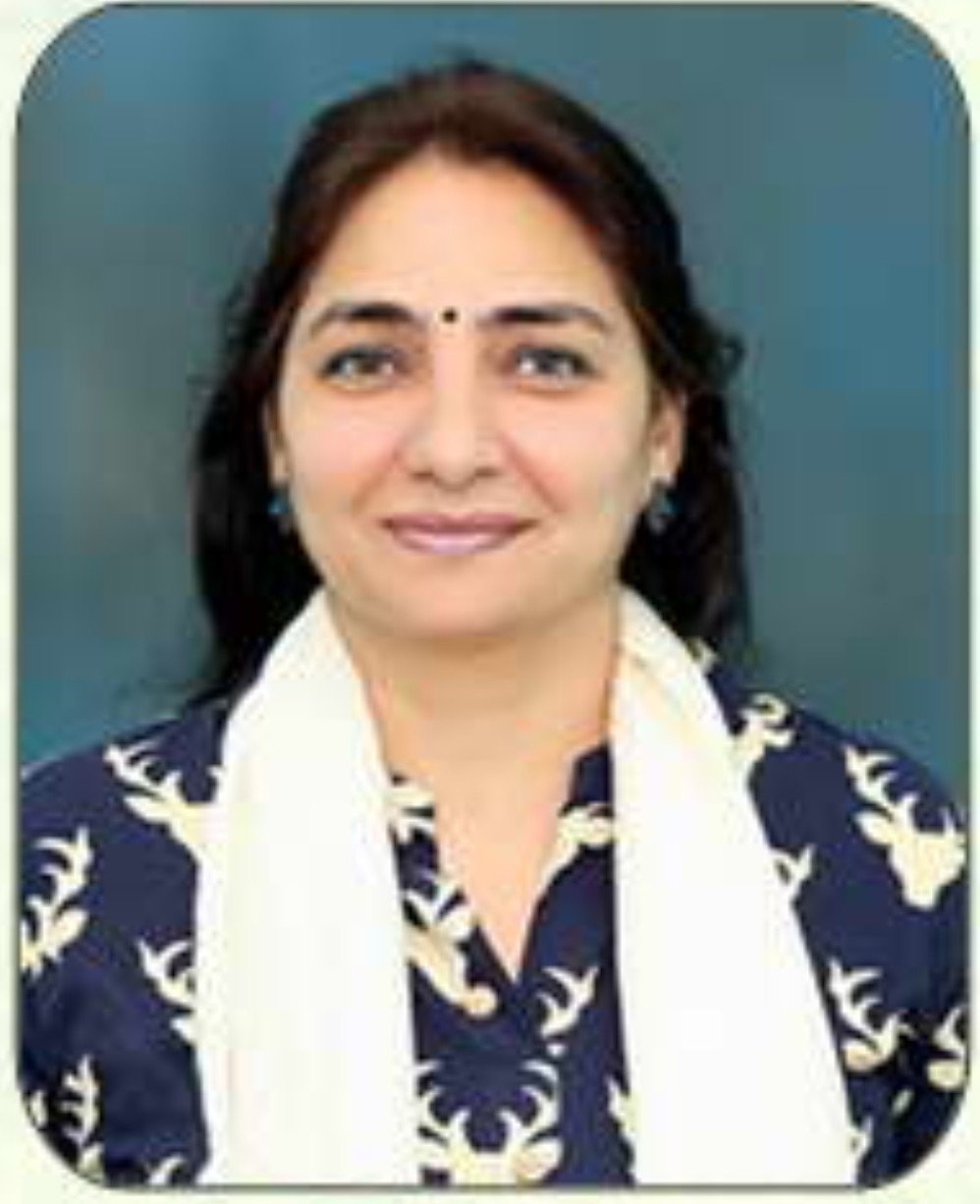
Under the dynamic leadership of Dr Rimplejeet Kaur, the Department is strengthened by a dedicated team of nine Assistant Professors — including four Ph.D. holders. Two faculty members are recognised Ph.D. supervisors at Panjab University, and three doctoral degrees have already been awarded under departmental supervision — on the lived experience of caste violence in Mirchpur (Haryana), the empowerment of women through Self-Help Groups in Karnal, and the forced migration of the Rohingya in Jammu — with three more Ph.D. scholars currently being supervised. The faculty’s diverse expertise spans Family and Gender Studies, Development Studies, Rural Sociology, Caste & Reservation Studies, Urban Sociology, Sociology of Media, International Migration, Sustainability Studies and Social Problems & Development Issues in India, contributing to a rich and intellectually vibrant learning environment.
The Department continues to adapt to contemporary educational needs in alignment with the National Education Policy (NEP) 2020, offering a flexible and holistic undergraduate curriculum comprising Discipline Specific Courses (DSC), Skill Enhancement Courses (SEC) and Value-Added Courses (VAC). At the postgraduate level, students are exposed to a diverse and interdisciplinary spectrum of courses encompassing sociological theories, social research methodologies, development studies, gender studies, rural sociology, criminology, media and cultural studies, and contemporary socio-cultural issues. Significantly, the Department distinguishes itself as the only college in the city offering such a wide range of optional papers at the postgraduate level — eleven in total — giving students an unusually broad palette of academic and career directions. The Department additionally offers a Certificate Course in Women Studies in affiliation with Panjab University.
The programmes are highly relevant for a wide spectrum of careers, including Civil Services, Social Work, Law, Academia, Journalism and Media, Human Resource Management, Public Policy, NGOs, the Development Sector, Research Institutions, Corporate Social Responsibility (CSR) and community development. Recent batches have placed students at the 2nd and 3rd merit positions in Panjab University M.A. Sociology examinations (May 2025) and have produced multiple UGC-NET qualifiers — including Neer Nahar, Kundan, Sheenu Bhardwaj and Gurmehak Singh — underscoring the Department’s strong record of academic outcomes.
The Department provides comprehensive academic support through UGC-NET coaching, remedial classes and a structured mentor-mentee programme that ensures individualised guidance and holistic student development. Regular Parent-Teacher Meetings (PTMs) facilitate continuous academic monitoring and meaningful interaction with parents. Teaching-learning is further strengthened through ICT-enabled pedagogies, smart classroom teaching, interactive discussions, presentations and blended learning practices — with faculty members having developed four-quadrant e-content modules for UG and PG sociology courses.
Beyond classroom instruction, the Department regularly organises seminars, workshops, expert lectures and educational field visits to promote intellectual enrichment and practical exposure — including ICSSR-sponsored National and International Seminars, panel discussions on gender and the law, gender sensitisation programmes coordinated with hospitals such as Sohana Hospital, and academic engagements on environmental sustainability, NEP and contemporary social issues. Faculty members actively coordinate institutional bodies including the Equal Opportunity Cell, Gender Champions Club, SC/ST Cell, Alumni Association, NIRF Cell, NAAC Criterion VI and VII, Remedial Classes, Research & Development Cell, NEP Committee and the Mental Health & Review Committee — providing students with opportunities for leadership and social outreach across the institution.
With its NEP-aligned curriculum, experienced faculty, research-active teachers and focus on academic as well as co-curricular excellence, the PG Department of Sociology prepares students to become socially responsible, critically informed and professionally competent individuals — ready to engage with a rapidly changing world.

Educators and researchers who shape the academic life of the department.
Nine Assistant Professors — including four Ph.D. holders and two recognised Ph.D. supervisors at Panjab University. Click any card to view a full profile.
Undergraduate, postgraduate and add-on courses offered by the department.
Two-year postgraduate programme covering classical and interpretive sociological theories, methods and techniques in social research, perspectives on Indian society, and a diverse and interdisciplinary spectrum of optional papers. SGGS College is the only college in the city offering such a wide range of optional papers at the PG level, spanning Social Dimensions of Development, Structural Moorings of Gender Oppression, Peasant and Rural Society in India, Social Development in India, Rural Development in India, Family in Cross-Cultural Perspective, Sociology of Crime, Social Problems, Environmental Crisis and Sustainable Development, Media and Culture, and Gender and Development.
NEP-aligned undergraduate honours programme with a flexible and holistic curriculum comprising Discipline Specific Courses (DSC), Skill Enhancement Courses (SEC) and Value-Added Courses (VAC). Sociology is also taken as an elective by students at the B.A. I, II and III year levels.
Certificate Course in Women Studies offered in affiliation with Panjab University, designed for students seeking foundational training in gender perspectives, women’s rights and contemporary issues affecting women in India.
Lectures, seminars, workshops, field trips and student-led work that extend learning beyond the classroom.
On 24 April 2026, the PG Department of Sociology hosted Rivaaz 26 for the outgoing M.A. Sociology batch. Curated by M.A. First Year students, the celebration blended cultural performances, shared memories and reflections, with the Principal and HoD encouraging students to apply their sociological understanding to foster inclusivity and meaningful change.
On 7 March 2026, an insightful lecture by Dr Harshneet Kaur on “Pain Relief vs. Pain Recovery” reached around 100 participants. The programme also felicitated women trailblazers across environmentalism, academia, sports, the armed forces and social work, accompanied by Bhangra and Lavani performances by NCC cadets.
On 23 August 2025, the Department, with Sohana Hospital, organised a dual initiative for gender awareness and preventive healthcare. Dr Jyoti Seth spoke on Deconstructing Gender Norms: Pathway to Social Transformation, and Ms Rashmi Arora Bhargava on Digital Detox. A free mammography screening camp was conducted for female faculty above 40 years of age.
On 7 March 2025, a panel discussion on the theme Accelerate Action featured Dr Upneet Lalli (Institute of Correctional Administration), Prof Jyoti Seth and Dr Ranjay Vardhan. The panel addressed new criminal laws, gender-neutral socialisation, the digital divide and the need for equal division of household responsibilities to advance gender equality.
The Department served as the Organising Secretariat for the ICSSR-sponsored International Seminar on Sociological Sensibilities on Education (2023), with Dr Sugandha Kohli Kaang as Organising Secretary — bringing together scholars from India and abroad on the sociology of education.
Structured UGC-NET coaching, remedial classes and a mentor-mentee programme ensure individualised guidance and holistic student development. Regular Parent-Teacher Meetings facilitate continuous academic monitoring and meaningful interaction with parents.
The Department regularly organises seminars, workshops, expert lectures and educational field visits to promote intellectual enrichment and practical exposure, complementing classroom learning with engagement on contemporary socio-cultural issues.
Faculty members actively coordinate institutional bodies including the Equal Opportunity Cell, Gender Champions Club, SC/ST Cell and Alumni Association — providing students with opportunities for leadership and social outreach.
Through the Dharat Suhavi Environment Society (2021–24) and the National Green Corps, the Department has led campus environmental work earning the Best Eco Club Incharge — National Green Corps Award for three consecutive years (2023, 2024, 2025).
Photographs from departmental lectures, workshops and student competitions.
Awards, recognitions, funded projects and milestones earned by faculty and students.
Neer Nahar, Kundan, Sheenu Bhardwaj and Gurmehak Singh successfully qualified the UGC-NET examination in Sociology.
Gurmehak Singh secured the 2nd position and Jasmine Kaur secured the 3rd position in M.A. Sociology (May 2025) Panjab University examinations.
Under the supervision of Dr Mani Pal Kaur, three Ph.D. scholars were awarded doctoral degrees at Panjab University on humiliation and violence in Mirchpur village (Haryana), women empowerment through Self-Help Groups in Karnal, and forced migration of Rohingya in Jammu. Three further Ph.D. scholars are currently being supervised.
Dr Sugandha Kohli Kaang was awarded the Best Eco Club Incharge — National Green Corps Award for three consecutive years (2025, 2024, 2023), and acted as Co-Investigator on the R&D project “Carbon Neutrality in Chandigarh” awarded by the Department of Environment, Chandigarh (2023).
The College was awarded Grade A by NAAC, with environment parameters greatly appreciated by the NAAC peer team. Dr Sugandha Kohli Kaang served as Convenor of NAAC Criterion VII; Dr Mani Pal Kaur serves as Convenor of NAAC Criterion VI.
Mr Jashandeep Singh serves as Dean, Alumni Association (since July 2025) and earlier as Dean, Student Welfare (August 2022–May 2025). Mrs Navneet Kaur Kaura is a member of the Panjab University P.G. Board of Studies (2023–25; re-appointed 2025–27).
Dr Mani Pal Kaur was awarded the UGC Junior Research Fellowship (JRF) in 2007 and is a Second Rank University Merit holder in M.A. (Sociology) from Guru Nanak Dev University.
Ms Manpreet Kaur Punia’s research paper Aftermath of International Migration on the International Emigrants’ Wives was published in the Scopus-indexed peer-reviewed Journal of Dalian University of Technology (2025).
Ms Harpreet Kaur received the Gold Medal at the M.Phil. (Sociology) level from Panjab University, alongside College Colour and Roll of Honour for M.A. performance at PGGCG-42.
Faculty representations on university and external academic bodies, editorial boards and professional societies.
Appointed for 2023–2025 and re-appointed for 2025–2027.
Also Convenor of NAAC Criterion VI, Subject Editor of Falcon: Journal of Multidisciplinary Research, and member of the NEP Committee and Research & Development Cell. Recognised Ph.D. supervisor at Panjab University.
Life Member of the Indian Sociological Society and the North West Indian Sociological Association; member of the Global Forum for Sustainable Development. Recognised Ph.D. supervisor at Panjab University.
Serving as Dean of the Alumni Association since July 2025; previously Dean, Student Welfare (August 2022–May 2025).
Coordinates the College-wide Remedial Classes programme, conducted twice each academic session prior to the MST examinations.
Invited as a Judge on the Folk Dance Judges Panel of the Panjab University Zonal Youth and Heritage Festival, 2025–26.
Laboratories, classrooms, libraries and learning resources that support our academic work.
Dedicated faculty room for the Post Graduate Department of Sociology, equipped with departmental computing infrastructure including desktop and printer.
Departmental reference collection of sociological texts and reference materials supporting teaching, research and student study.
Smart classroom teaching, ICT-enabled pedagogies and blended learning practices used for interactive discussions, presentations and experiential learning across UG and PG levels.
In-house developed four-quadrant e-content modules and ICT-enabled teaching practices for UG and PG Sociology courses — combining text, video, self-assessment and reference resources.
Students of the Department have full access to the Central College Library’s sociology collection, including peer-reviewed journals, reference books and electronic resources.
Papers, books, chapters and research projects authored by faculty. Click any entry to open the full PDF.
Office, email, phone, and Head-of-Department details.